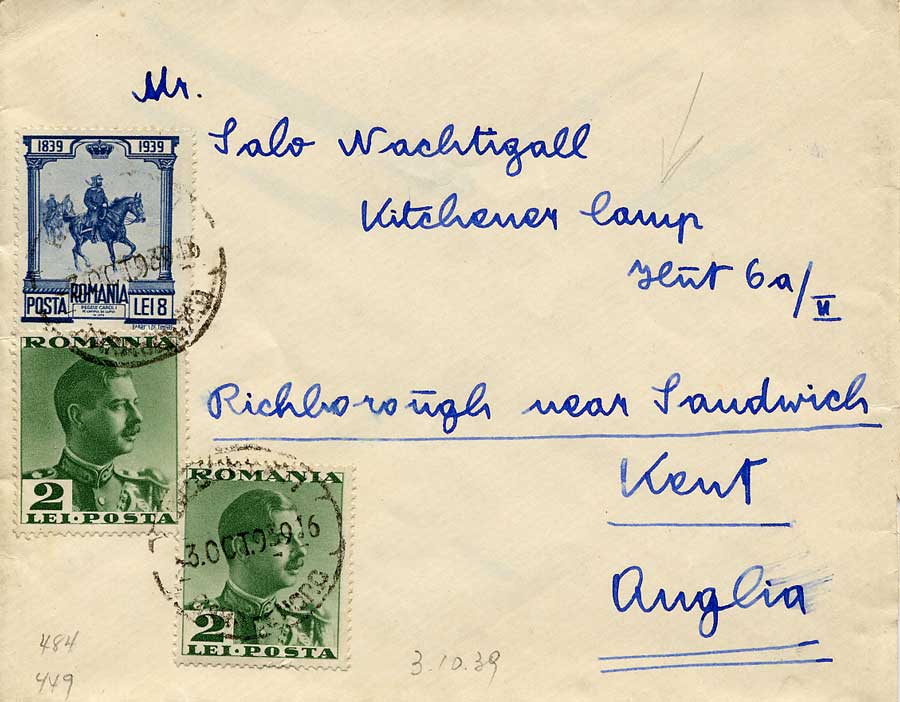
Early in 1939, The Council for German Jewry in Great Britain made arrangements to rent Kitchener Camp, a World War I camp located in Southeast England. Originally, the camp was to house about 3,500 male refugees, primarily from Germany and Austria. After the outbreak of the war, most of the internees were allowed to volunteer for the Auxiliary Military Pioneer Corps, with the rest of the internees being transferred to the Ramsey Camp on the Isle of Man. The camp was disbanded by June, 1940.
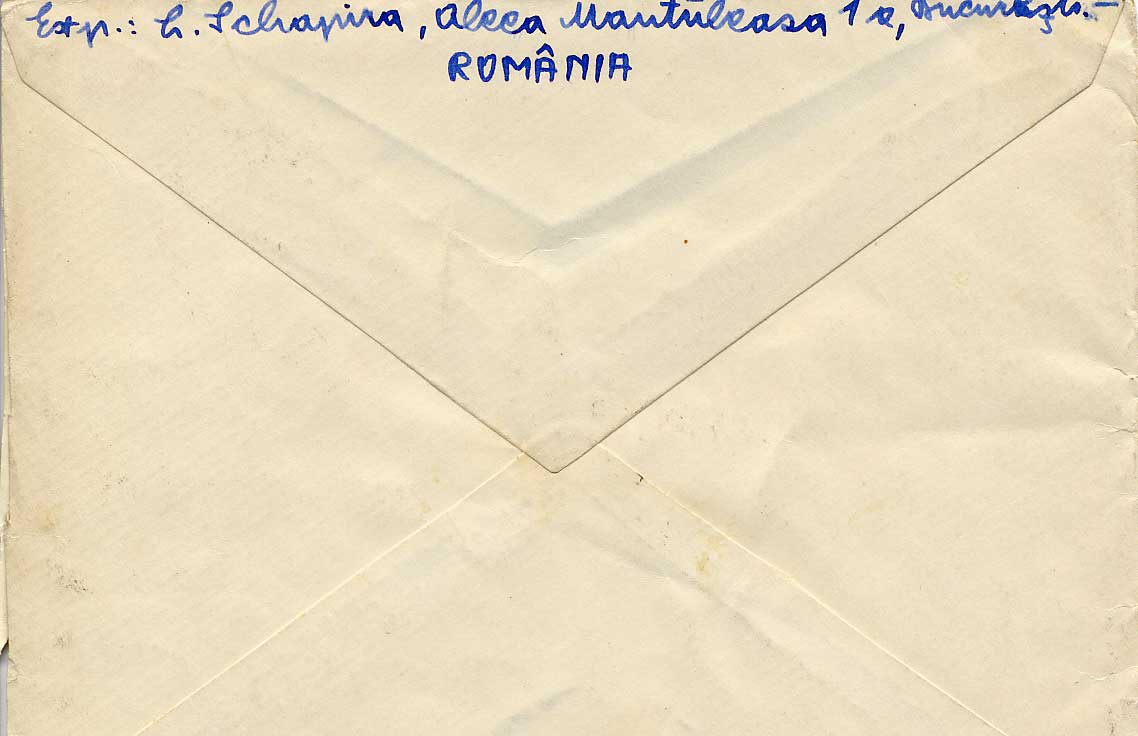
Below are thumbnails of the front and back of a cover from Romania postmarked October 3, 1939,to Lalo Wachtigall at Camp Kitchener. Please click on the thumbnail to see the full image, and then click your back key or "Cover" in the left frame to return.
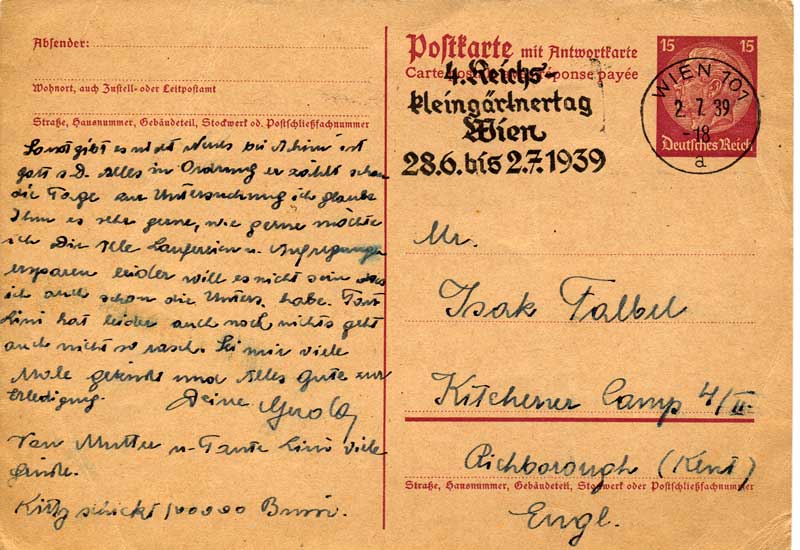
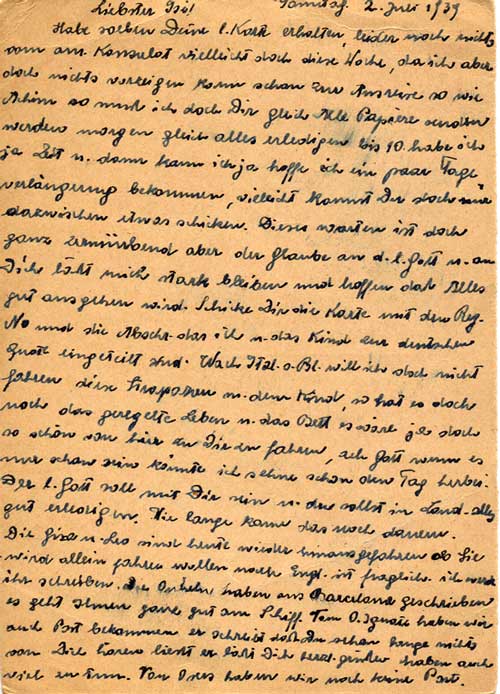
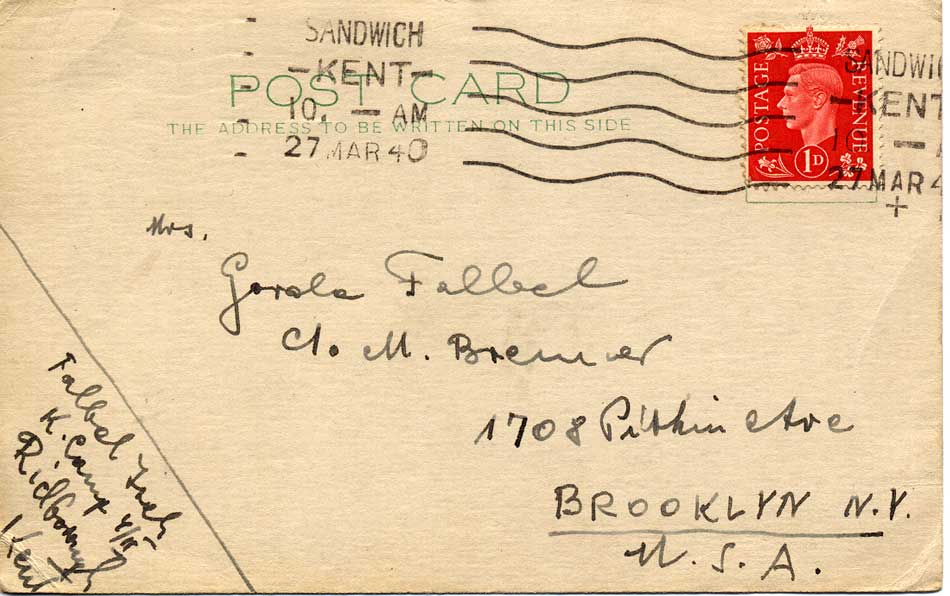
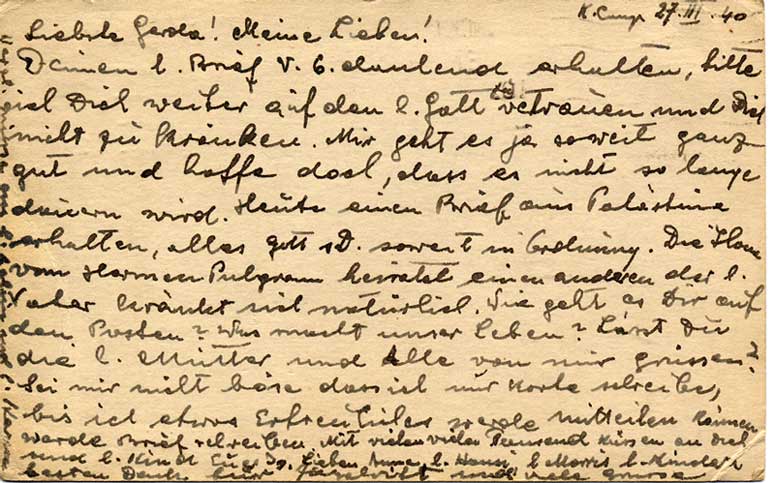
Below are six postcards to and from an internee at Kitchener Camp 4/II, Isak Falbel, a refugee from Vienna, Austria. The first postcard is postmarked July 2, 1939, from Vienna to Isak at Camp Kitchener. This card is from Isak's wife and indicates that she is still waiting for word from the American consulate about the papers for emigration to America. The second postcard is is dated August 4, 1939, from Isak at Camp Kitchener to his wife in Brooklyn. In the card, he thanks God that she was able to leave Austria in time. Please click on the thumbnail to see the full image, and then click your back key or "Postcards 1 & 2" in the left frame to return.
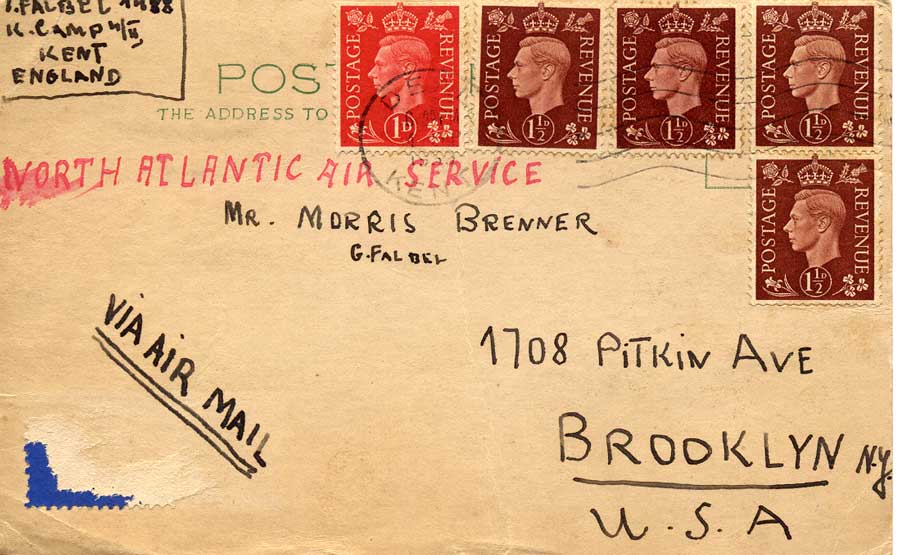
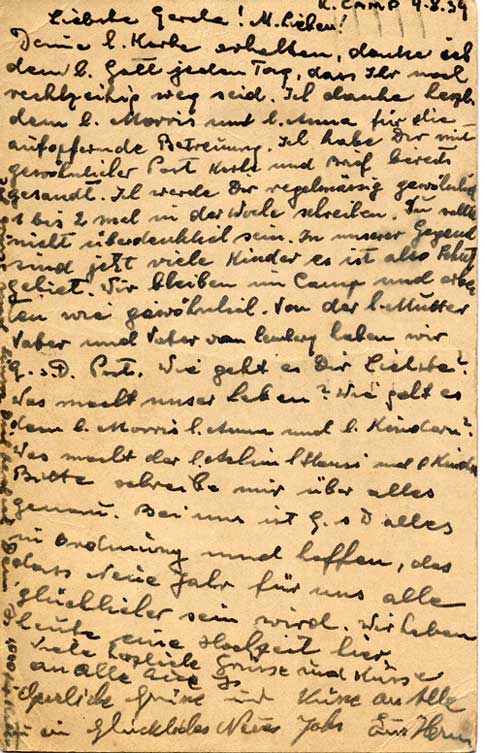
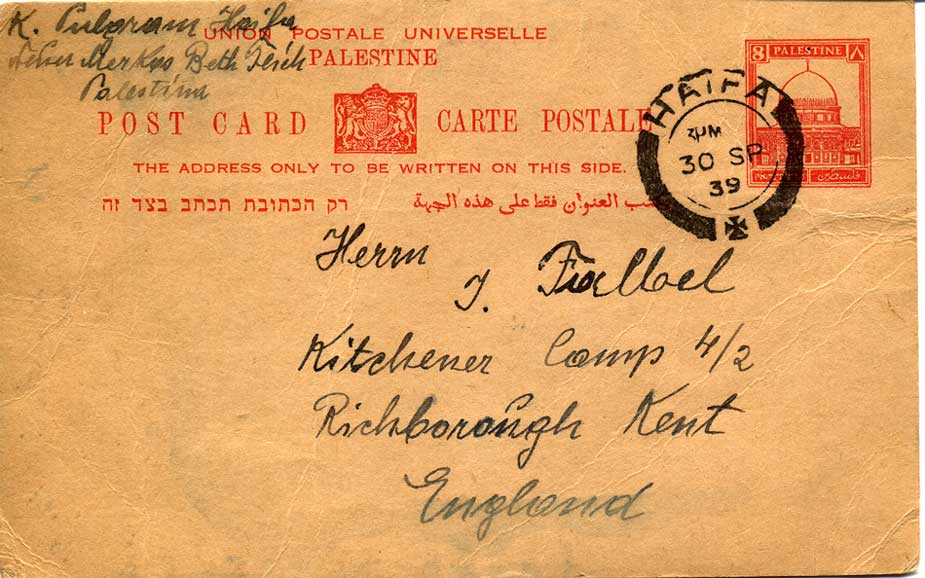
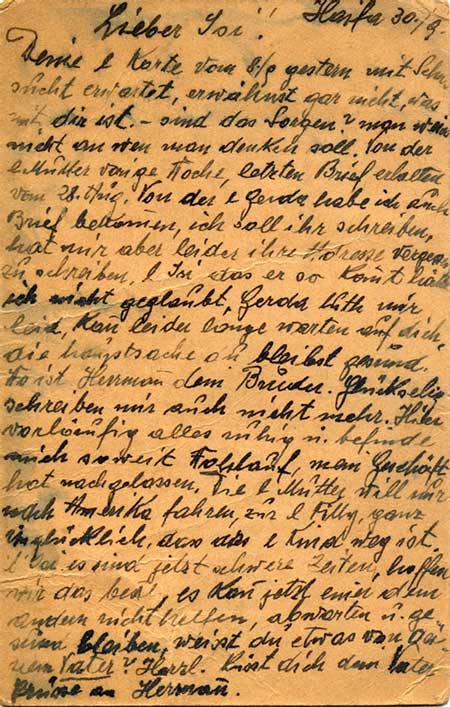
The third postcard is postmarked September 30, 1939, from Haifa to Isak at Camp Kitchener. This card is from Isak's father. The fourth postcard is is postmarked October 13, 1939, from Isak's wife in Brooklyn to Isak at Camp Kitchener. Please click on the thumbnail to see the full image, and then click your back key or "Postcards 3 & 4" in the left frame to return.
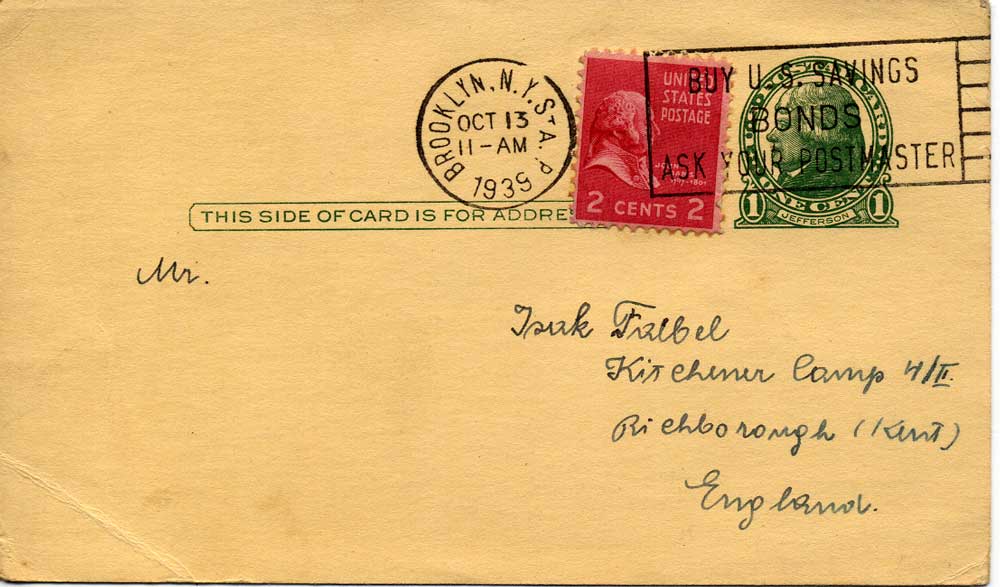
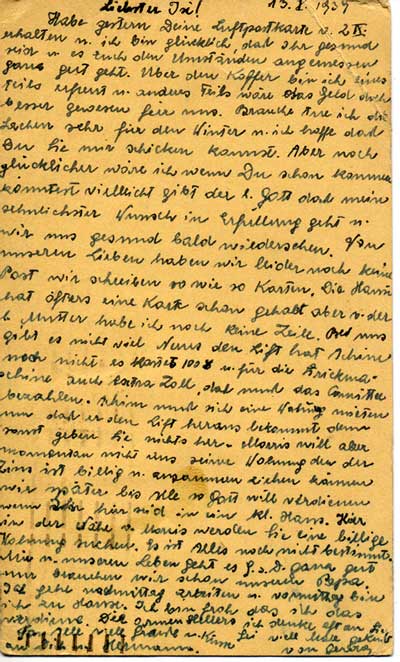
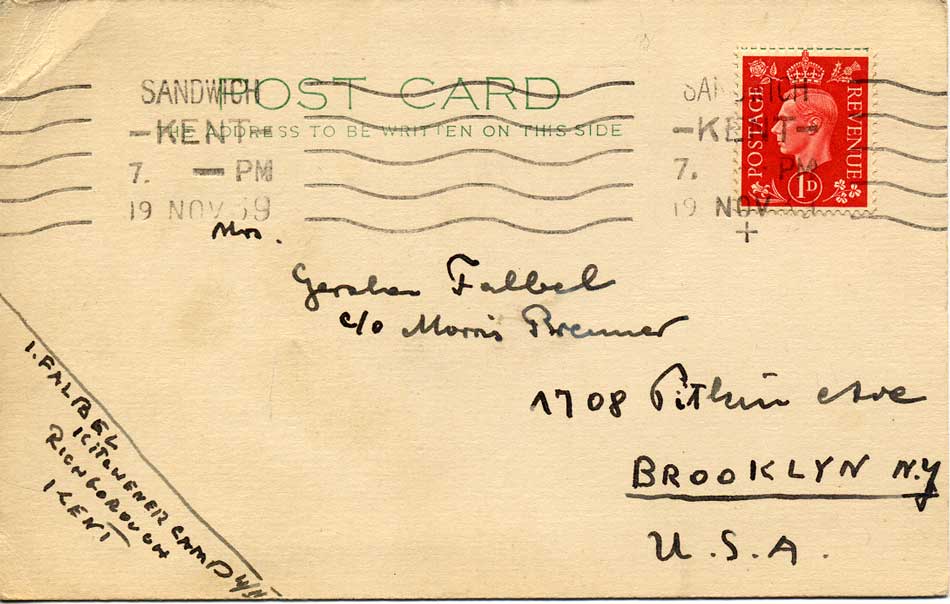
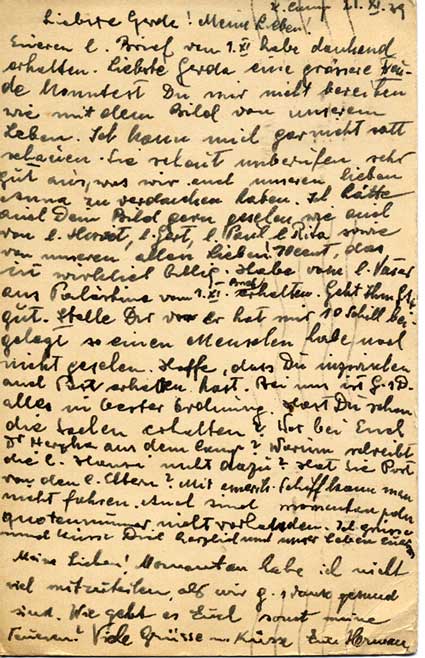
The fifth postcard is postmarked November 19, 1939, from Isak at Camp Kitchener to his wife in Brooklyn. The last postcard is postmarked March 27, 1940, from Isak at Camp Kitchener to his wife in Brooklyn. Please click on the thumbnail to see the full image, and then click your back key or "Postcards 5 & 6" in the left frame to return.
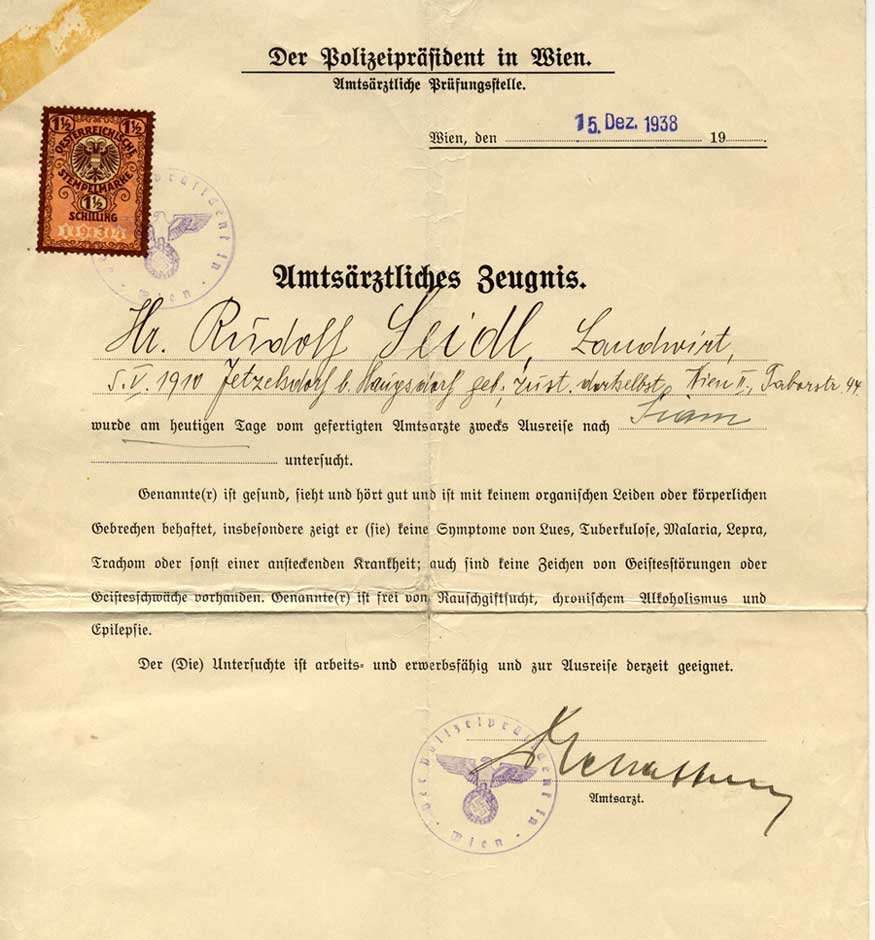
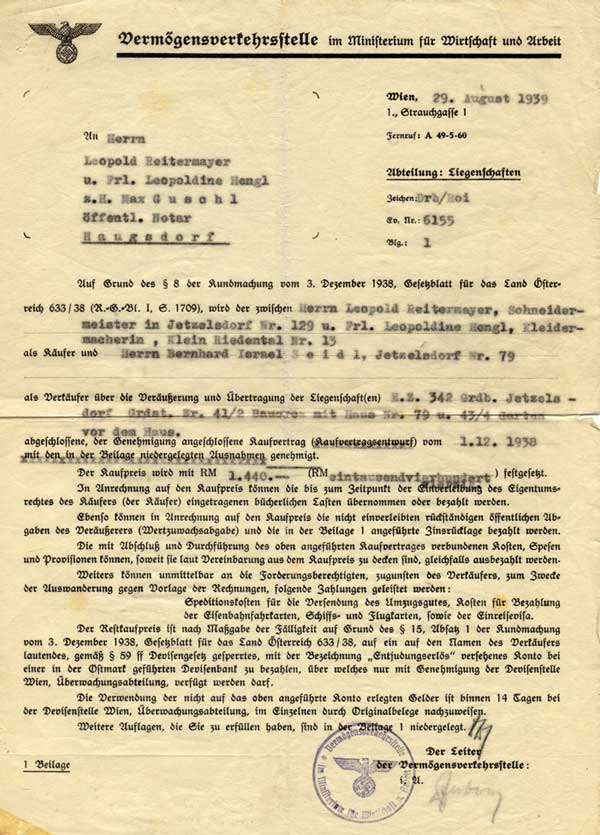
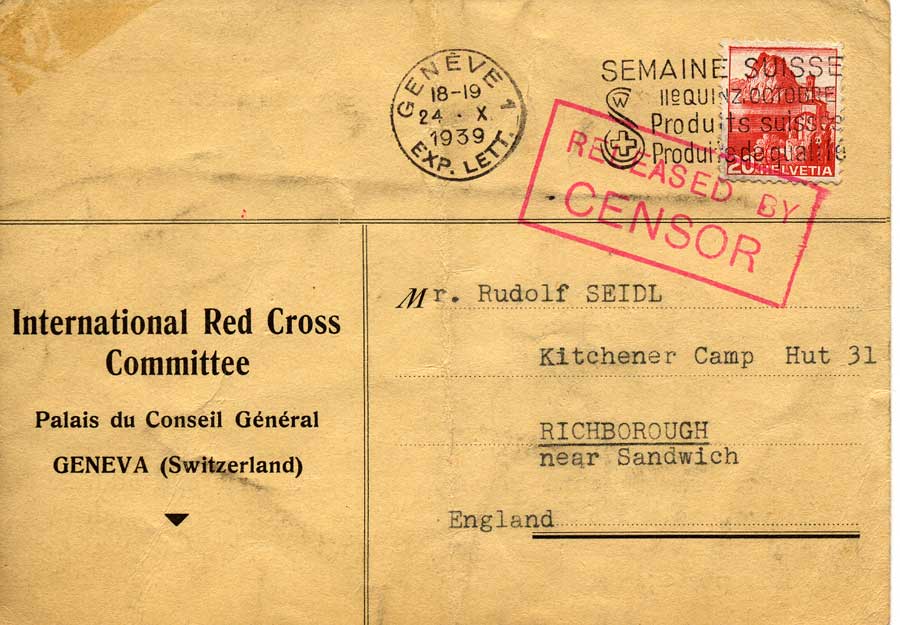
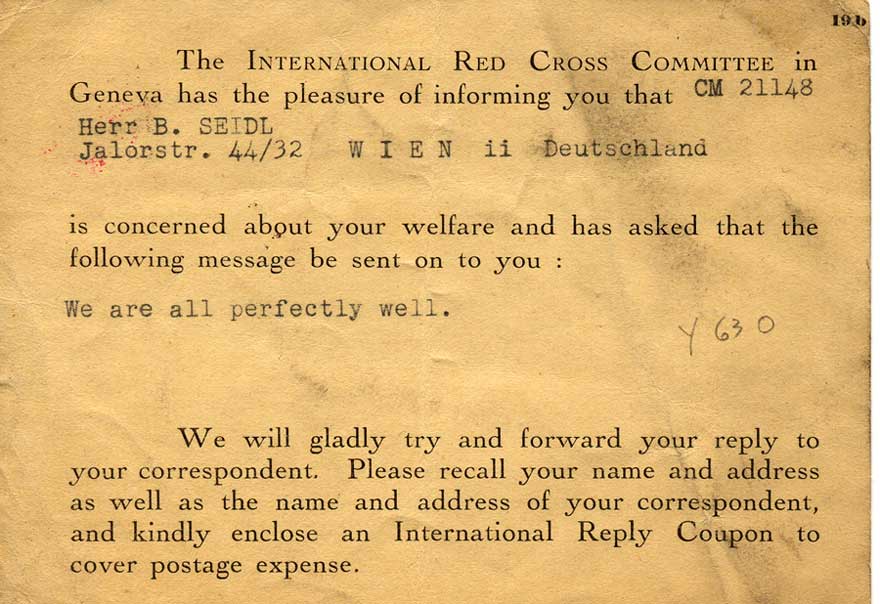
Below are thumbnails of documents pertaining to the emigration of Rudolph Seidl, an Austrian Jew, to the Kitchener Camp. The first item is a Vienna police waiver, dated December 18, 1938, permitting emigration. The second item is a document dated August 29, 1939, pertaining to the sale (probably forced) of property owned by Rudolph's father, Bernhard Seidl. The last item is the front and back of an International Red Cross reply card postmarked Geneva, October 24, 1939, conveying a message from Rudolph's father. Please click on the thumbnail to see the full image, and then click your back key or "Seidl Family" in the left frame to return.
As a result of Kristallnacht, the British government was persuaded by local individuals and organizations to ease immigration restrictions for a number of children under age 17 from Germany, Austria and annexed areas of Czechoslovakia. These children had to be financially sponsored in Britain and had to travel alone, without parents or guardians. The first transport arrived in Harwich, Great Britain, on December 2, 1938, and the last transport left from the Netherlands on May 14, 1940. Over 9,000 children reached Great Britain under this program.
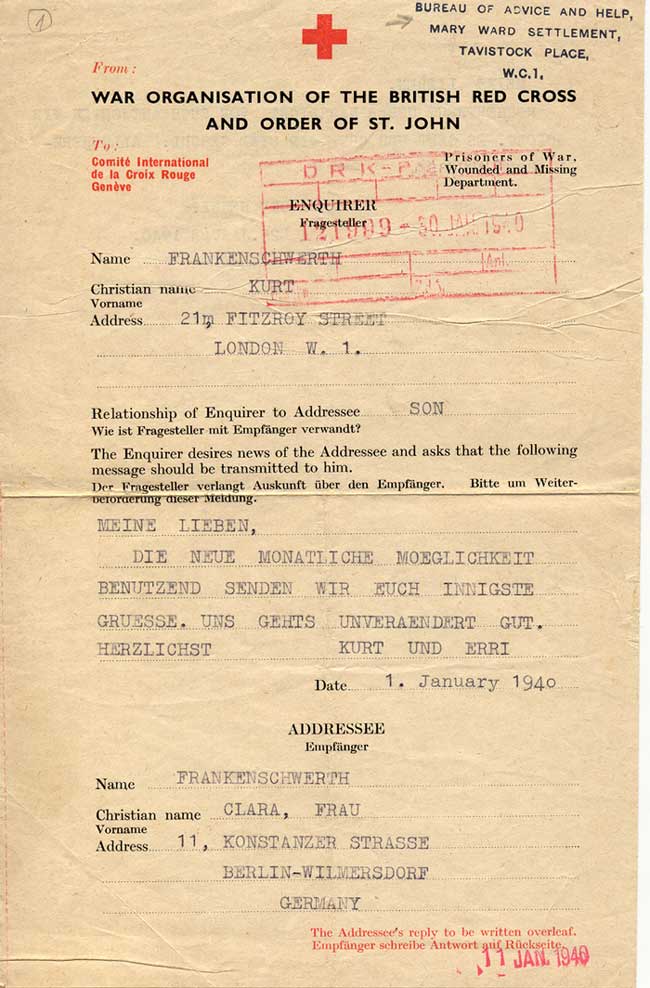
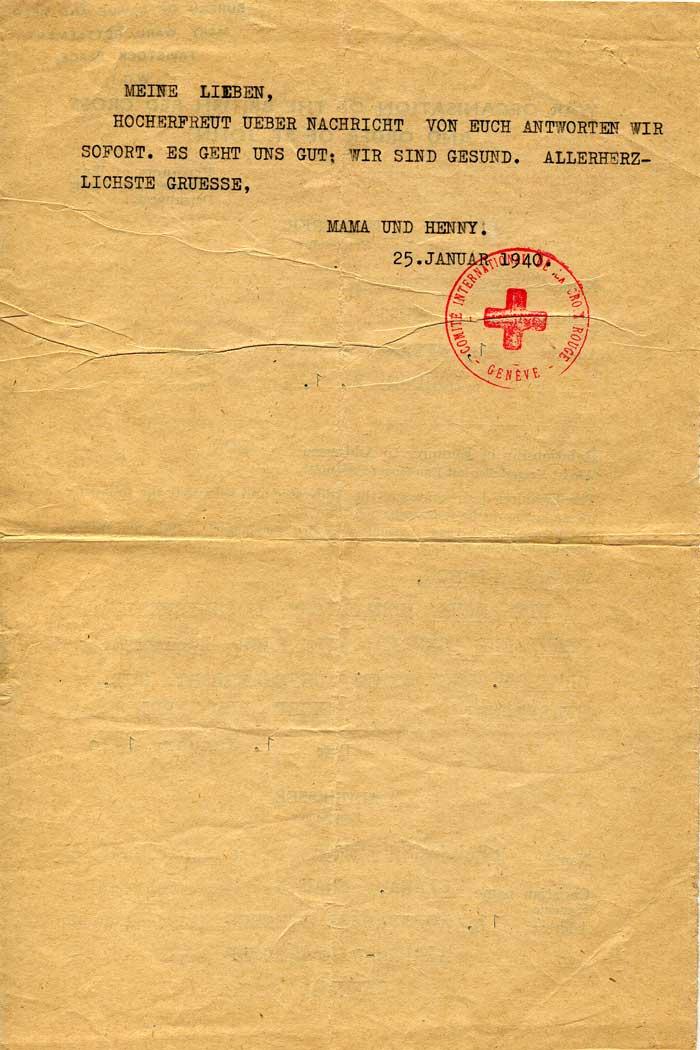
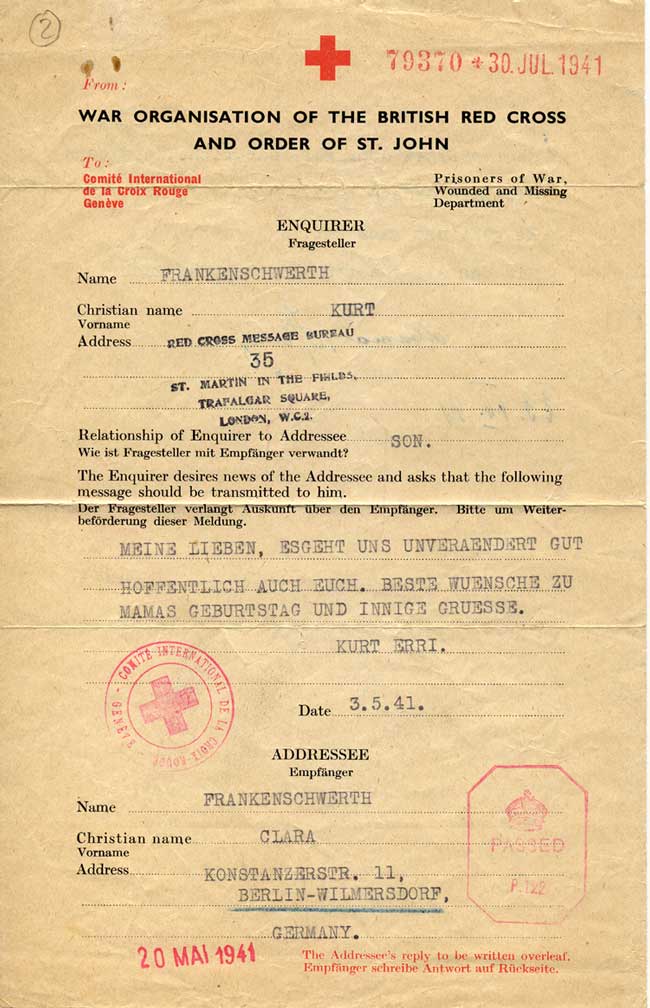
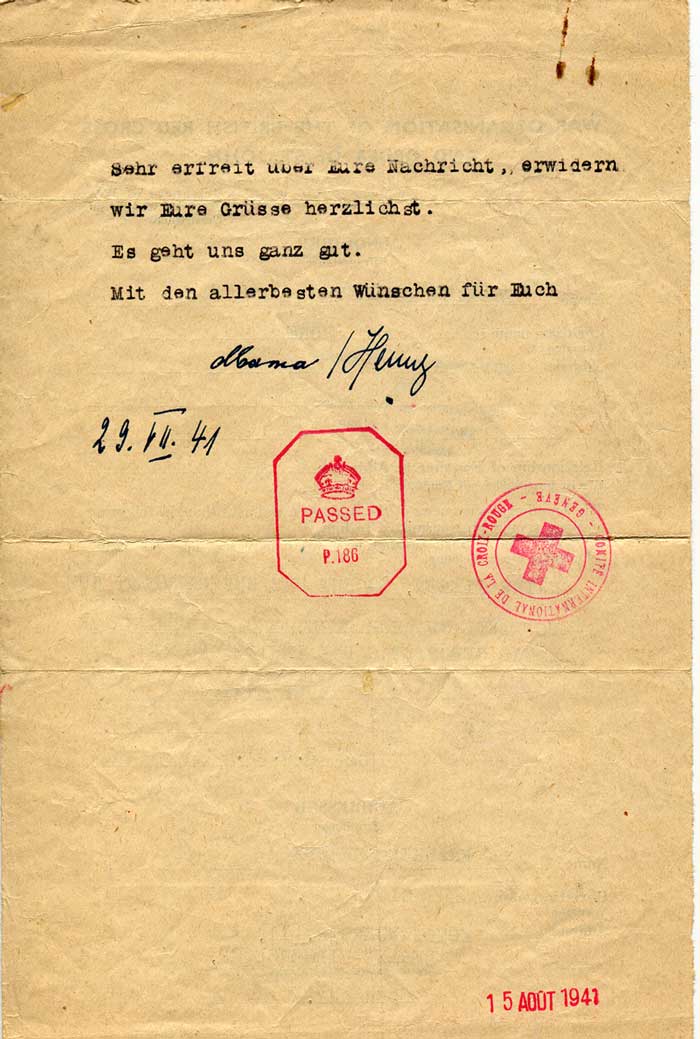
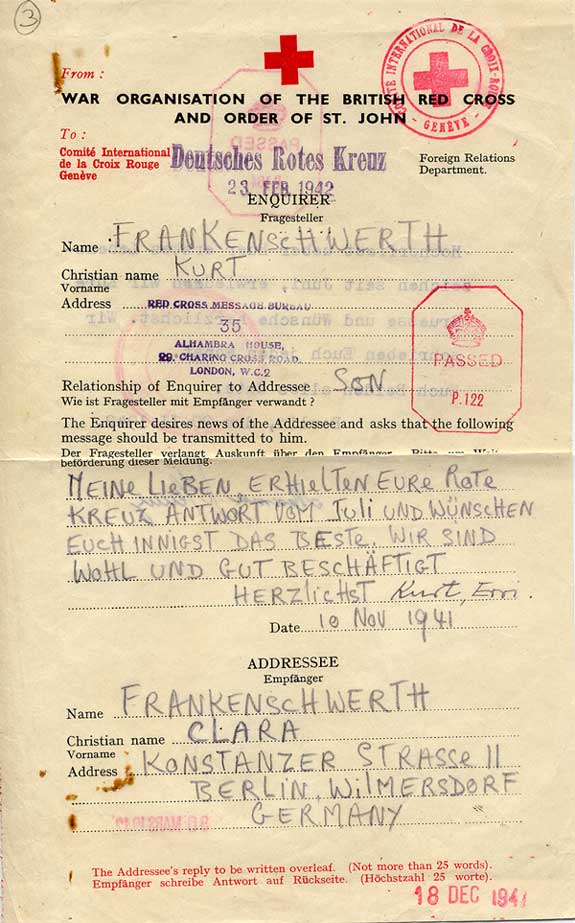
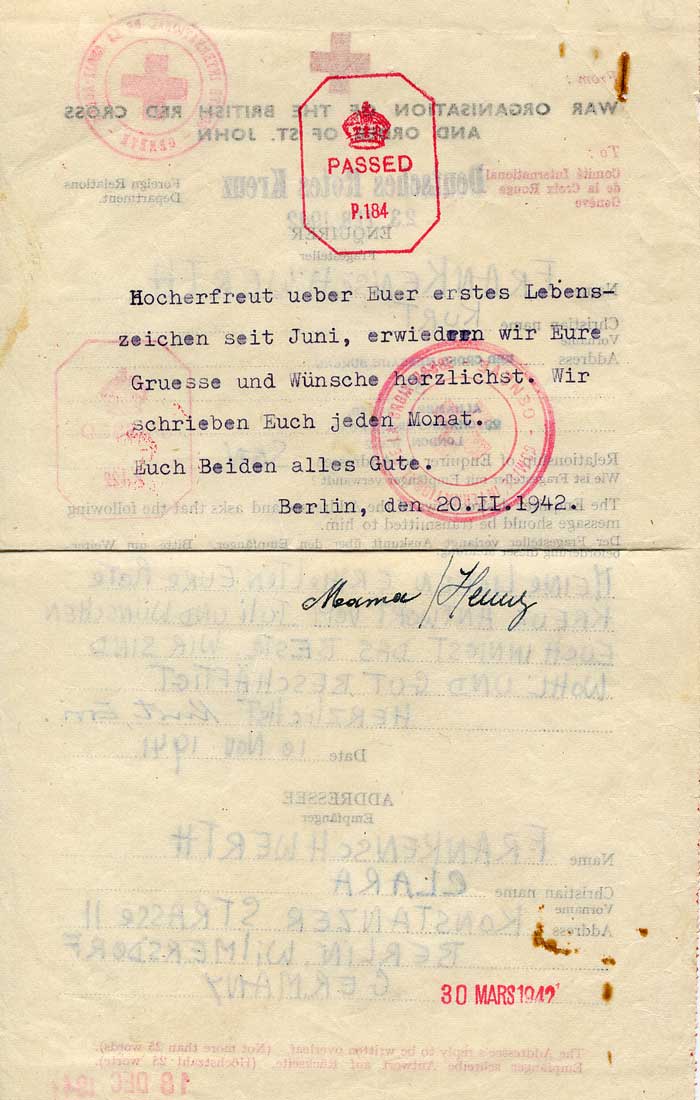
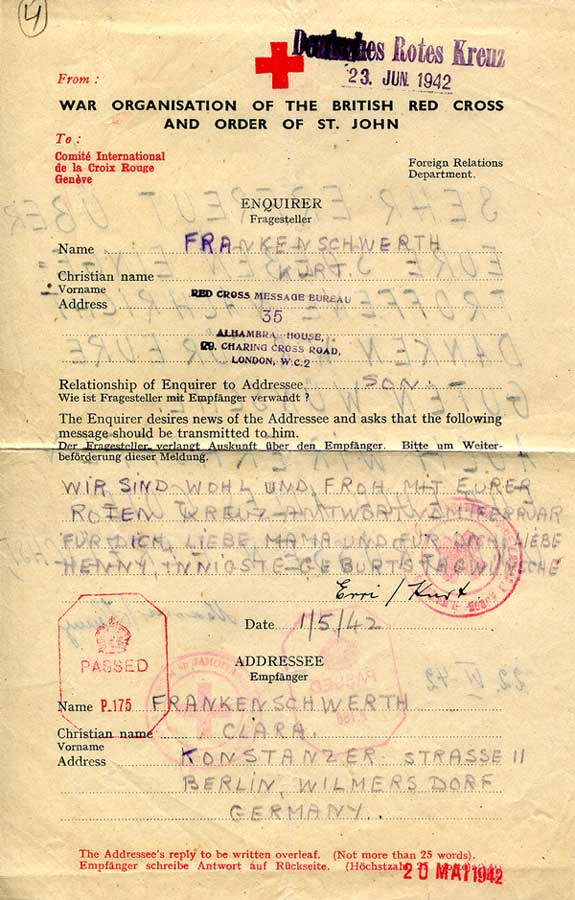
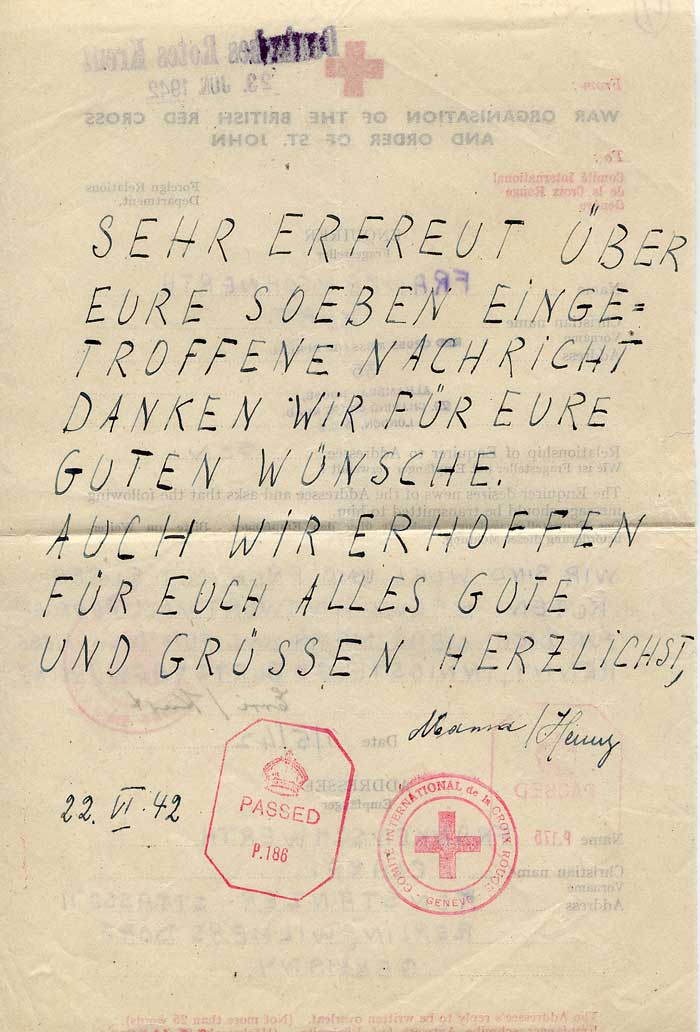
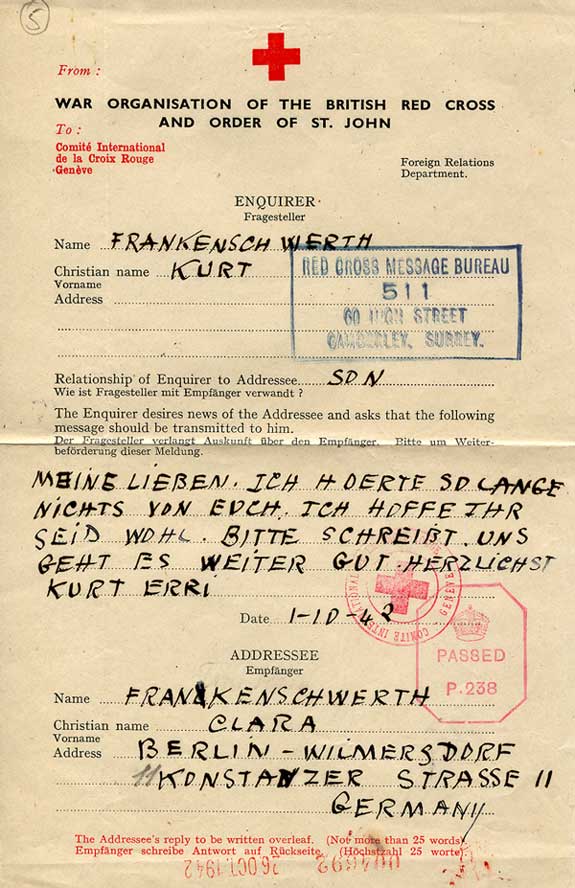
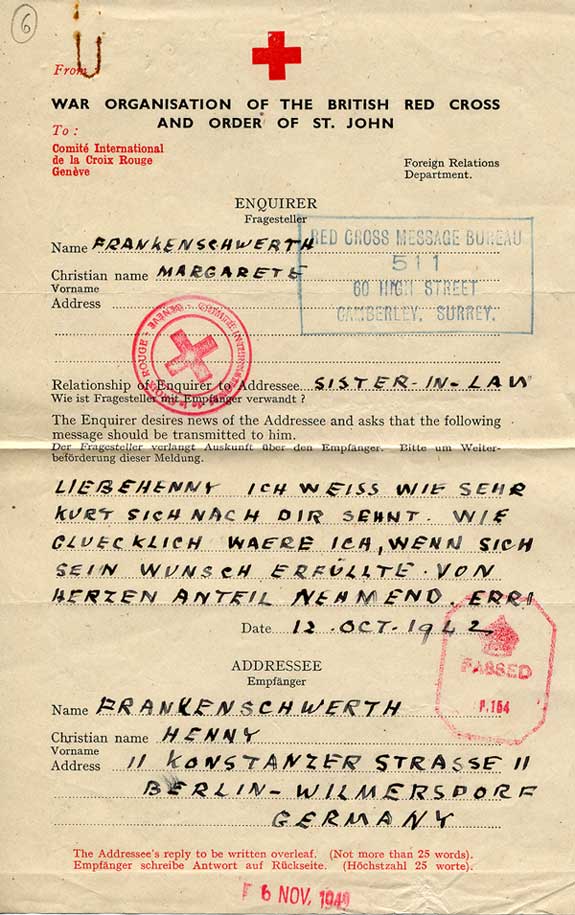
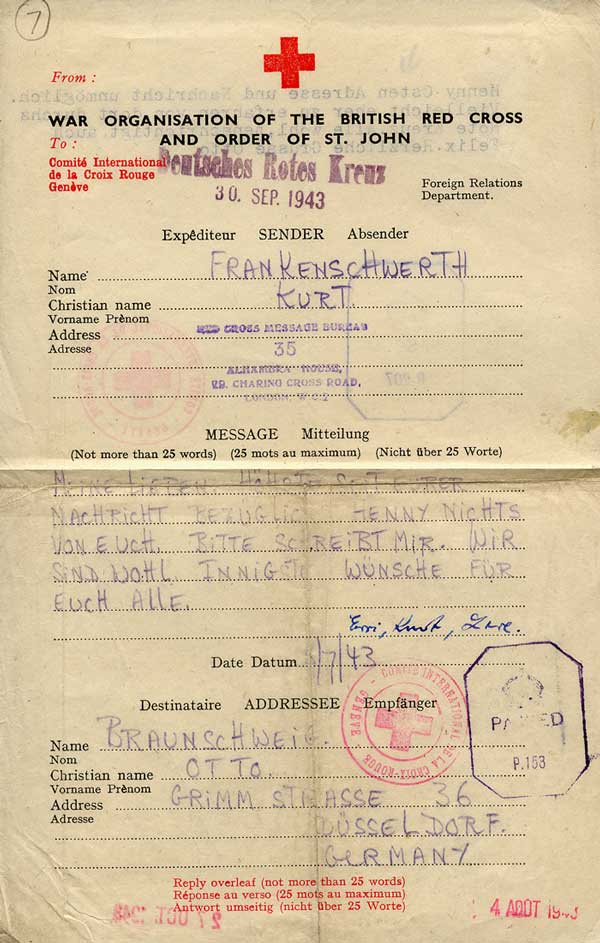
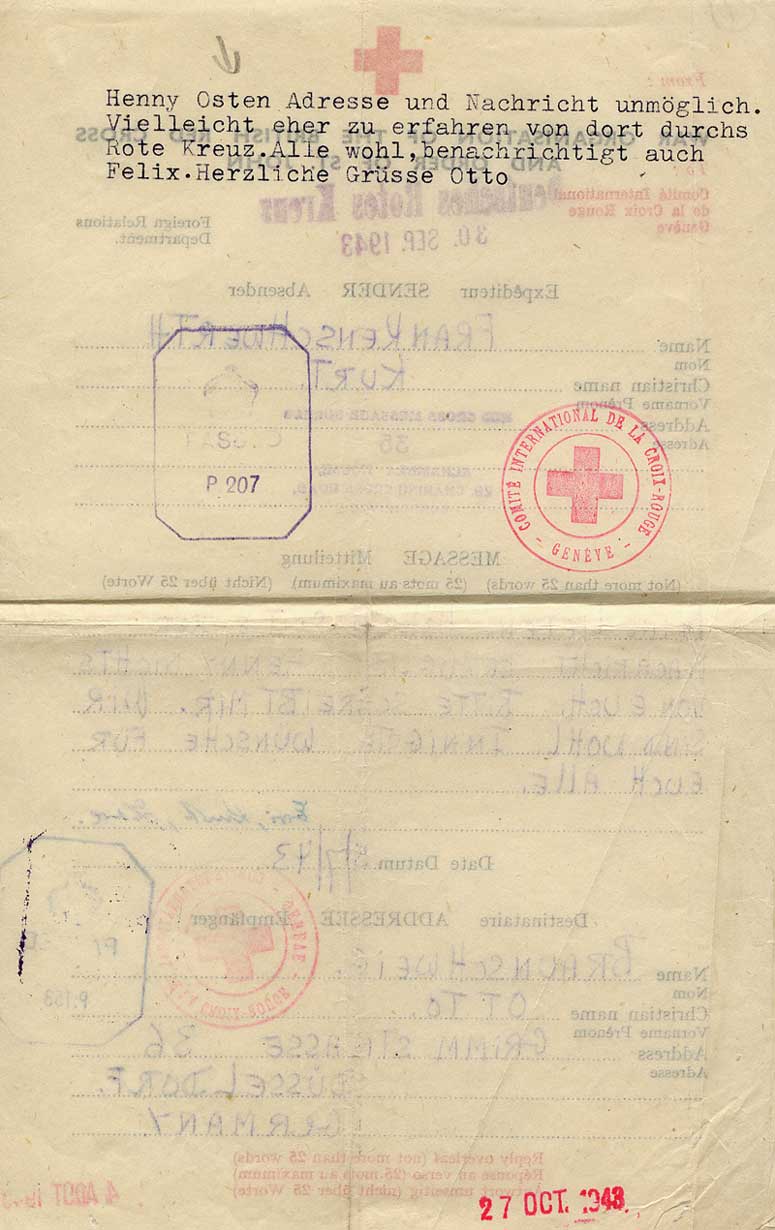
Below are thumbnails of the front and back of seven British Red Cross Enquiry Forms mailed by Kurt Frankenschwerth, a Kindertransport child living in London, to his mother, Clara Frankenschwerth in Berlin. Messages on these forms were limited to 25 words.
Form 1 is dated January 1, 1940, and contains a reply from Clara and Henny (apparently Kurt's older sister) dated January 25, 1940. Form 2 is dated May 3, 1941, and contains a reply from Clara and Henny dated July 29, 1941. Please click on the thumbnail to see the full image, and then click your back key or "Forms 1-2" in the left frame to return.
Form 3 is dated November 10, 1941, and contains a reply from Clara and Henny dated February 20, 1942. Form 4 is dated May 1, 1942, and contains a reply from Clara and Henny dated June 22, 1942. Please click on the thumbnail to see the full image, and then click your back key or "Forms 3-4" in the left frame to return.
Form 5 is dated October 1, 1942, which was returned with no reply on October 26, 1942. Form 6 is an enquiry from Margarette Frankenschwerth (Henny's sister-in-law) to Henny dated October 12, 1942, which was returned with no reply on November 6, 1942. This failure to get a reply from his mother or sister, prompted Form 6, an enquiry from Kurt, dated July 9, 1943, to an Otto Braunschweig in Dusseldorf, probably a family member or non-Jewish friend. Otto replied with the terrible news that Henny had been transported to the east. There was no mention of Clara. Please click on the thumbnail to see the full image, and then click your back key or "Forms 5-7" in the left frame to return.
Beginning in September, 1938, planning commenced regarding the internment of aliens, including the selection of sites for camps. After the war started, tribunals were set up to categorize enemy aliens among the following categories: "A" Those to be interned; "B" Those not interned, but restricted; and "C" Those to be at liberty. Aliens started to be interned by the middle of October, 1939. In May, 1940, concerns regarding an invasion by the Germans prompted an order to intern all enemy alien males between ages 16 to 70. By the end of May, 1940, orders were given to arrest and intern all male and female aliens. Ultimately, camps included enemy aliens, political prisoners, and illegal refugees. In addition to Great Britain and the Isle of Man, camps were established in Australia, Canada, Cyprus, Kenya, Mauritius, and Palestine.
Martin Lynes, Kitchener Camp 1939-40, The Israel Philatelist, October 2001, P. 188
Ernest Goodman, The Epic of the Kindertransport, The Israel Philatelist, October 2008, P. 172-175
http://www.kindertransport.org/
http://www.holocaust.com.au/mm/ch_transport.htm
http://www.rrz.uni-hamburg.de/rz3a035/kindertransport.html
http://www.ushmm.org/wlc/article.php?lang=en&ModuleId=10005260
http://timewitnesses.org/english/IsleOfMan.html
Earl Kaplan and Norman Gladstone, British Internment Camps- Onchan, The Israel Philatelist, February, 1986, P. 4777-80
Copyright © 2003-5 Edward Victor